What Are the Best Commercial Wood Doors from China?

Choosing the best commercial wood doors from China requires more than comparing prices and polished catalog images. The right decision depends on performance, construction, testing, and dependable communication. A door may look impressive in a showroom, yet fail to suit a busy hotel corridor or a humid retail entrance.

Commercial wood doors are commonly built with solid timber, engineered cores, hardwood veneers, or laminate finishes. Each option affects stability, appearance, acoustics, and maintenance. Pay close attention to door thickness, edge protection, hinge quality, frame compatibility, and surface consistency. Small details matter. A poorly sealed bottom edge can absorb moisture quickly. A slightly mismatched veneer can disrupt an entire lobby.

Experienced buyers should request physical samples and clear technical documents. Review fire, smoke, acoustic, and durability test reports from recognized laboratories. Confirm that the tested design matches the supplied door, hardware, and frame. Ask about moisture control, factory inspections, packaging, and replacement procedures. Reliable Chinese manufacturers usually explain these points without avoiding difficult questions.

Look beyond the lowest quotation. A lower price may hide weaker cores, limited finishing options, or inconsistent quality control. Still, no supplier is perfect. I have seen attractive samples lose their appeal when production tolerances changed. That deserves honest attention. Independent inspections can reduce surprises before shipment. Check references from comparable projects, not only general testimonials.

The best supplier combines technical capability, stable production, transparent documentation, and practical after-sales support. This guide examines those factors closely, helping architects, contractors, distributors, and property owners compare Chinese manufacturers with greater confidence. Expect useful answers, but also verify every important claim.

What Are the Best Commercial Wood Doors from China?

Commercial Wood Door Types Available from China

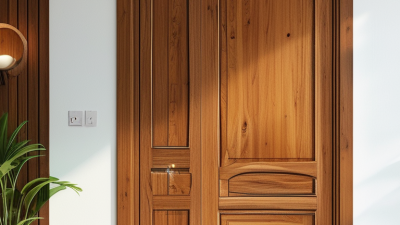
Commercial wood doors from China cover several practical types for offices, hotels, schools, hospitals, and retail spaces. Solid wood doors offer a warm, substantial feel and suit executive rooms or reception areas. They can use oak, ash, walnut, or other specified timber species. Engineered wood doors provide better dimensional stability in humid environments. Their veneer surfaces can still deliver a natural appearance.

Fire-rated wood doors are common in corridors, stairwell approaches, and service areas. Their performance depends on the complete door assembly, including the core, frame, seals, hinges, and closer.

Acoustic wood doors help reduce conversation and equipment noise. They work well in meeting rooms, guest rooms, and consultation spaces.

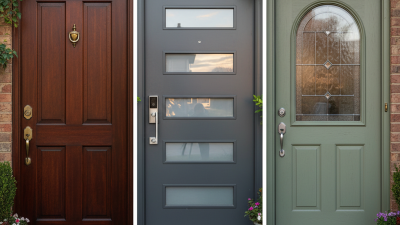
Glazed wood doors bring daylight into offices, but the glass specification must match the project’s safety requirements.

I have reviewed commercial door schedules where the door leaf looked excellent, yet the frame details were incomplete. That caused installation delays. A better approach checks thickness, core construction, edge sealing, hardware preparation, and test documentation before production.

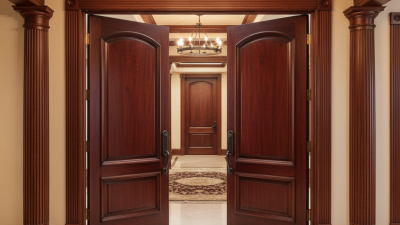
Double doors support wider traffic routes, while single doors fit smaller rooms. Sliding or pocket systems save space, but they may need stronger wall coordination.

Chinese manufacturers can often customize sizes, veneers, laminates, vision panels, and hardware locations. Still, customization is not automatically better. Samples, drawings, moisture expectations, and independent performance reports should be checked carefully. Small details matter.

Key Materials and Construction Standards to Compare

What Are the Best Commercial Wood Doors from China? Key Materials and Construction Standards to Compare

Commercial wood doors from China should be compared by core material, not surface appearance alone. Solid timber offers strength, but it can move with humidity. Engineered wood usually provides better dimensional stability. For fire-rated applications, mineral or composite cores may be more suitable. MDF and particleboard can reduce cost, yet their edge performance requires careful review. A dense veneer, sealed edges, and moisture-resistant adhesive also matter in busy buildings.

Construction details often decide service life. Check door thickness, frame joints, hinge reinforcement, screw holding strength, and bottom clearance. A well-built door should close without rubbing after repeated use. Moisture content must match the installation climate. Many buyers overlook this point. That mistake can cause swelling, gaps, or warped panels. Ask for production drawings, material declarations, and test reports for fire, smoke, acoustic, or impact performance. The documents should match the exact door assembly, not a similar sample.

Applicable standards depend on the project location and building category. Confirm the required Chinese, European, or North American testing system before production. Fire ratings must cover the complete door set, including the frame, seals, hardware, and glazing. Factory quality control should include batch sampling and dimensional checks. A pre-shipment inspection is useful, but it cannot replace proper installation. Even excellent doors may fail when stored in damp conditions or fitted with unsuitable hardware. Sample approval is essential, although one sample never reveals every production risk.

How to Evaluate Chinese Door Manufacturers and Suppliers

Choosing the best commercial wood doors from China starts with evaluating the manufacturer, not the catalogue.

A credible factory should disclose wood species, core construction, moisture targets, adhesive grades, and surface finishes.

Ask for dated production photos and a sample cross-section. A polished showroom can still hide weak edge sealing.

Request independent test reports for fire resistance, sound reduction, durability, and formaldehyde emissions. Check whether the reports match the proposed door core, thickness, hardware, and production site.

ISO 9001 certification can support process control, but it does not prove product quality. Review inspection records, corrective actions, and batch traceability. Small details matter.

Material sourcing deserves equal attention. The FAO Global Forest Resources Assessment 2020 states that forests cover about 31 percent of global land, while approximately 420 million hectares disappeared between 1990 and 2020.

Require legal-source documentation and recognized chain-of-custody evidence for timber and veneer.

The World Bank’s 2023 Logistics Performance Index ranked China 19th among 139 economies, with a score of 3.7 out of 5. That indicates strong logistics capability, but delivery performance still depends on packaging, port selection, and export experience.

Use a pre-shipment inspection with moisture meters and dimensional checks. For a 900-millimeter door, even a few millimeters of warping can disrupt installation.

I would also test a pilot batch before signing a large contract. It costs more initially. It may prevent an expensive mistake.

Essential Performance Features for Commercial Applications

Commercial wood doors from China should be judged by tested performance, not appearance alone. In commercial applications, a door may face repeated impacts, cleaning chemicals, humidity, and changing temperatures. The U.S. Energy Information Administration’s Commercial Buildings Energy Consumption Survey counted 5.9 million commercial buildings in 2018. Many contain conditioned spaces, making frame sealing and controlled air leakage practical concerns.

Fire performance deserves careful verification. NFPA’s Fire Loss in the United States During 2023 report recorded about 1.5 million fires nationwide. A properly specified fire-rated door assembly can slow smoke and flame movement, but its rating depends on the complete assembly. Request labeled test evidence for the leaf, frame, hinges, closer, glazing, and hardware. Do not accept a certificate covering only the wood panel.

Acoustic control also matters in hotels, offices, schools, and healthcare areas. Laboratory results under ASTM E90 can show a door assembly’s sound transmission class, although field performance is usually lower. Moisture-resistant cores, sealed edges, impact-resistant veneers, and replaceable kick plates improve service life. A 2024 building-sector report from the United Nations Environment Programme identified buildings as responsible for approximately 32% of global energy use. That figure does not prove a door will save energy. It does suggest that weak seals and poor installation should not be ignored. Real projects are messier. Ask for factory quality records, installation instructions, dimensional tolerances, and independent test reports before comparing prices.

What Are the Best Commercial Wood Doors from China?

Essential performance features for commercial applications

The chart shows commonly specified performance ranges for commercial wood doors. Fire resistance is measured in minutes, acoustic performance in STC, durability by operating cycles, and thermal performance by U-value. Lower U-values indicate better insulation. Exact requirements should be verified against the project specification and applicable building codes.

Ordering, Quality Control, and Import Considerations

China can supply commercial wood doors with flexible sizes, veneers, cores, and finishes. Ordering works best with approved drawings, a physical sample, and a detailed purchase specification. Define door thickness, swing direction, veneer matching, hardware preparation, packaging, and acceptable tolerances. The World Bank’s 2023 Logistics Performance Index gives China a score of 3.7 out of 5. Transport is capable, but port congestion and factory scheduling still affect delivery. Allow contingency time. It is not optional.

Quality control should begin before production. Check timber moisture, panel flatness, veneer alignment, edge bonding, surface color, and hardware positions. For many interior projects, moisture targets around 8–12% may be suitable, but the destination climate matters. Fire-rated or acoustic doors require valid test evidence for the intended market. A third-party inspection can verify random cartons, dimensions, finish defects, and loading photos. One sample can look perfect while a full batch varies. That uncomfortable risk deserves attention. FAO’s Global Forest Resources Assessment 2020 reports about 4.06 billion hectares of global forest area, so species identification and responsible sourcing documents should be recorded clearly.

Tips: Confirm the HS code with your customs broker. Select Incoterms carefully. Require commercial invoices, packing lists, certificates, and fumigation records where applicable. Use export-grade corner protection and moisture barriers. Before shipment, inspect the container seal and photograph every pallet. Build a small replacement allowance into the order, because installation damage is often underestimated.

What Are the Best Commercial Wood Doors from China? - Ordering, Quality Control, and Import Considerations

Practical comparison of common commercial wood-door options, procurement requirements, quality checks, and import planning factors

Door Category Typical Construction Suitable Commercial Applications Indicative Technical Range Key Quality-Control Checks Ordering and Import Notes
Paint-Grade Flush Wood Door Engineered timber or composite core with hardwood veneer, wood-fiber face, or paint-grade surface. Office buildings, schools, hotels, apartments, utility rooms, and general interior openings. Common thickness: approximately 35–45 mm. Standard height and width should be confirmed against the project schedule. Core options may include hollow, cellular, particleboard, or mineral-based materials. Check flatness, edge bonding, face smoothness, core density, screw-holding capacity, moisture content, and consistent paint adhesion. Usually the simplest option for large-volume projects. Request a finished sample, approved shop drawing, hardware schedule, and written tolerance requirements before production.
Veneered Flush Wood Door Engineered core faced with natural or reconstituted wood veneer, usually with matching edge material. Hotels, executive offices, residential developments, restaurants, and public interiors where appearance is important. Typical face veneers include oak, walnut, ash, or other specified species. Veneer thickness, panel matching, finish sheen, and color variation must be defined in the specification. Verify veneer species, grain direction, sequence matching, color consistency, open joints, bubbling, telegraphing, finish thickness, and repaired defects. Natural wood varies in color and grain. Approve a control sample or veneer panel and state acceptable variation in the purchase contract.
Solid-Core Commercial Wood Door Dense particleboard, laminated timber, composite, or mineral-based core with wood veneer, laminate, or paint finish. High-traffic corridors, classrooms, meeting rooms, hotel rooms, and areas requiring greater durability and acoustic control. Often heavier than hollow-core doors. Acoustic, impact, and durability performance depends on the complete doorset, including frame, seals, glazing, and hardware. Confirm actual core composition and density, door weight, hinge reinforcement, edge integrity, screw retention, dimensional stability, and test reports for specified performance. The buyer must verify whether the building code requires a tested doorset rather than an untested door leaf. Confirm handling, pallet strength, and installation labor requirements.
Fire-Rated Wood Doorset Rated door leaf combined with a compatible frame, intumescent seals, hinges, closer, latch, and other approved components. Exit routes, stairwells, hotel rooms, apartment corridors, healthcare facilities, and other code-controlled openings. Fire ratings vary by jurisdiction and test method. Common project requirements may include 20, 45, 60, or 90 minutes, but the required rating must be confirmed by the local authority and project specification. Review a valid test or certification document, label information, component compatibility, maximum size, glazing limits, clearances, seals, hardware, and field-installation instructions. Do not rely on a fire rating claimed only for the door leaf. Certification may be market-specific, and substitution of hardware or frame components can invalidate the tested assembly.
Acoustic Wood Doorset Heavy or composite core with perimeter seals, drop seal, acoustic frame, and carefully fitted hardware. Conference rooms, hotel rooms, offices, classrooms, studios, and healthcare consultation rooms. Sound-control performance is normally expressed as a laboratory rating such as STC or Rw. The complete tested assembly, not the door leaf alone, determines performance. Check laboratory report scope, perimeter gaps, threshold seal operation, frame construction, leaf weight, hardware fit, and installation tolerances. Request the exact tested configuration. A higher-rated leaf may not deliver equivalent field performance if the frame, seals, wall construction, or installation differs.
Moisture-Resistant Wood Door Engineered wood construction with sealed edges, moisture-resistant adhesives, protective coatings, or exterior-grade facing materials. Covered entrances, washroom areas, service rooms, humid interiors, and selected sheltered exterior applications. Performance depends on exposure, coating system, edge sealing, and installation. Most interior wood doors are not automatically suitable for direct rain or prolonged wet conditions. Inspect edge sealing, coating coverage, swelling resistance, adhesive performance, moisture content, corner protection, and compatibility with the intended environment. State the exposure category clearly. For unsheltered exterior use, confirm that the proposed construction is specifically tested or warranted for that environment.
Glazed Commercial Wood Door Wood or engineered-wood leaf with a factory-prepared vision panel, glazing bead, safety glass, and optional fire-rated glazing system. Offices, schools, hospitality areas, corridors, reception spaces, and meeting rooms requiring visibility. Glass type, thickness, panel size, safety classification, and fire performance must match the project requirements and local regulations. Check glass markings, bead security, corner joints, sealant, panel dimensions, impact-safety requirements, and compatibility with any fire-rated assembly. Confirm whether glazing is supplied installed or separately. Protect glass during packing and specify replacement responsibility for transit damage.
Acquisition and Quality-Control Stage Recommended procurement sequence for a commercial wood-door project. Applicable to hotels, offices, schools, healthcare, apartments, retail, and institutional projects. 1. Confirm code and performance requirements. 2. Issue drawings and schedules. 3. Approve samples. 4. Verify materials. 5. Inspect first production. 6. Conduct pre-shipment inspection. 7. Check goods on arrival. Use measurable acceptance criteria for dimensions, squareness, flatness, finish, hardware preparation, labels, packaging, and quantity. Keep photographs and inspection records. A third-party inspection before shipment can identify defects while correction is still practical. Payment milestones should be linked to approved samples and inspection results.
Packing, Shipping, and Import Planning Doors are normally protected with corner guards, foam or separators, moisture-resistant wrapping, pallets, and export cartons or crates. All commercial projects importing wood doors from China. Plan separately for production, inspection, inland transport, port handling, ocean or air freight, customs clearance, and final delivery. Door volume and weight affect freight cost. Inspect packaging strength, moisture protection, container loading, carton labels, item counts, hardware separation, and evidence of impact or water exposure. Agree Incoterms, customs classification, import documents, country-of-origin marking, insurance, fumigation or wood-packaging requirements, and responsibility for destination charges before ordering.
Sustainable Material Verification Wood veneer, solid timber components, engineered wood, adhesives, coatings, and packaging materials. Projects with environmental, green-building, or responsible-sourcing requirements. Evidence may include chain-of-custody documentation, recycled-content records, formaldehyde-emission test results, low-emission coating data, and environmental product information where applicable. Match certificates and test reports to the actual material, production site, product model, and shipment. Check document validity and scope rather than accepting generic claims. Environmental requirements differ by destination and building program. List required documents in the tender and purchase contract before production begins.

Note: Technical ranges and procurement practices are indicative. Final dimensions, performance ratings, testing requirements, certifications, customs treatment, and installation criteria must be confirmed against the destination country’s building codes, project specifications, and import regulations.