China Top Home Doors Manufacturers for Global Buyers
China’s home doors industry is expanding from workshop-scale production to highly engineered global supply chains. Grand View Research estimates that the global doors market reached approximately USD 140 billion in 2023, with continued growth expected through 2030. Its analysis highlights renovation, urban housing, energy efficiency, and construction activity as key demand drivers.
The opportunity is substantial. The details are not simple.
China’s leading manufacturers now supply steel security doors, fire-rated doors, solid-wood entrances, aluminum systems, and smart entry products. Buyers must examine more than catalog photography. Factory audits, material certificates, testing records, moisture resistance, insulation values, hardware quality, and export experience all matter. A beautiful walnut finish cannot compensate for poor sealing or unstable dimensions.
Sarah Susanka, architect and author of The Not So Big House, has described the front door as “the handshake of the house.” That observation remains useful for international buyers. A door combines security, climate control, architecture, and daily touchpoints. It must feel solid when opened, close quietly, and survive repeated seasonal changes.
Industry data offers direction, not certainty. Market definitions differ between research firms, especially when interior doors, entrance systems, and hardware are combined. Buyers should therefore verify claims against product samples, independent reports, and factory documentation. This guide examines China’s top home doors manufacturers through product capability, customization, certifications, production experience, quality control, and overseas service. Some rankings may change. Supplier performance can vary by project, region, and specification. That is why careful comparison still matters.

Home Door Manufacturing in China: Industry Scope and Product Categories
China Top Home Doors Manufacturers for Global Buyers
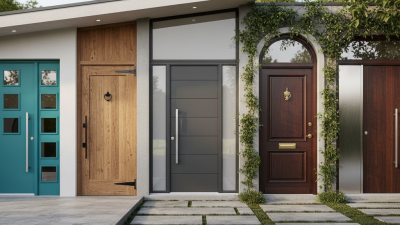
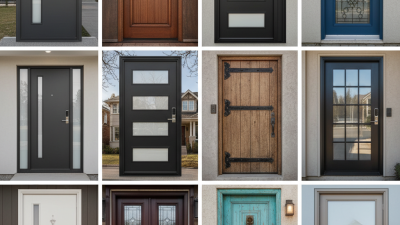
Home door manufacturing in China covers a broad range of residential and project applications. Common categories include solid wood doors, engineered wood doors, steel security doors, aluminum doors, and WPC or PVC doors. Each material serves a different purpose. Solid wood offers warmth, while engineered wood supports consistent sizing and cost control. WPC and PVC perform well in humid areas. Steel and aluminum suit entrances requiring strength and weather resistance.
Manufacturers may also produce fire-rated, sound-reducing, sliding, folding, and smart-ready door systems. However, product names can be misleading. Buyers should check the actual core material, surface finish, hinge type, lock preparation, and test documentation. Door performance depends on more than the panel. Frames, seals, hardware, and installation tolerances matter just as much. A factory with modern cutting and finishing equipment can improve accuracy, but capacity still needs verification through samples and production records.
Export projects often require customized dimensions, colors, packaging, and opening directions. Moisture protection deserves attention, especially for long-distance shipping and coastal buildings. A low quotation may exclude hardware, pallets, inspection, or replacement parts. That creates problems later. The process is not flawless. Color differences may appear between samples and large batches, and some factory claims need independent checking. Reliable sourcing therefore combines technical drawings, approved samples, staged inspections, and clear acceptance standards. This approach helps global buyers compare manufacturers beyond attractive catalog images.
Key Regions and Production Strengths of Chinese Door Manufacturers
China’s door manufacturing map is regional, not uniform. Guangdong, especially Foshan, is strong in aluminum, glass, and modern interior door systems. Its dense supplier network supports custom finishes, rapid sampling, and coordinated hardware sourcing. Export buyers often find mature container-loading experience there.
Zhejiang has a notable base for wooden and engineered-wood doors. Factories commonly offer veneer, paint, molded, and solid-core constructions. Ningbo and nearby ports can simplify export logistics. Jiangsu contributes engineered timber, laminate surfaces, and automated panel processing. Shandong is known for steel doors and practical security-oriented structures. Specifications still vary widely.
Production strength needs verification. A capable supplier should provide moisture readings, material declarations, dimensional tolerances, and relevant fire or acoustic test reports. Ask for a full corner sample, not only a catalog image. Check hinge reinforcement, seal compression, frame squareness, and carton edge protection. Factory audits often reveal attractive samples failing after humidity changes during shipment. That risk is easy to underestimate. Regional reputation cannot replace factory-level inspection. Buyers should compare batch records, inspection photos, and corrective-action responses before placing volume orders. Small details matter. A supplier that explains limitations clearly may be more dependable than one promising every finish and delivery date.
How to Evaluate Quality, Materials, and Manufacturing Standards
For global buyers, door quality begins with measurable performance, not polished showroom samples. The International Energy Agency reports that buildings consume about 30% of global final energy. A poorly sealed exterior door can increase drafts, moisture entry, and maintenance costs. Ask suppliers for air-leakage, water-penetration, and structural test results under standards such as ASTM E283, E331, and E330.
Look closely at materials. Check timber moisture content, core density, steel thickness, surface coating, and hardware cycle testing. For wood products, the FSC Facts and Figures report recorded more than 160 million certified forest hectares in 2023. Certification supports responsible sourcing, but it does not prove door durability. The factory must still show batch records, adhesive controls, and finish inspections. Small details matter.
They matter more than slogans.
Manufacturing reliability requires repeatable systems. ISO 9001 certification can indicate documented quality procedures, but buyers should verify its scope and validity. Request calibration records, nonconformity reports, corrective actions, and photographs from actual production lines. Independent laboratory reports are stronger when they identify the exact door model and test date. A sample may look excellent while later batches vary. I have seen specifications become vague at this stage. That is where careful buyers should slow down, compare tolerances, and inspect several finished units. A supplier that welcomes destructive testing may offer more confidence than one offering only attractive certificates.
Selecting and Working With a Reliable China Door Manufacturer
Selecting a reliable China door manufacturer requires more than comparing unit prices. Grand View Research valued the global doors market at approximately USD 151 billion in 2023. That scale attracts capable factories and careless suppliers. Buyers should verify both.
Request a current business license, production address, export history, and quality certificates. Check whether certificates match the actual factory. ISO 9001 certification supports process control, but it does not guarantee flawless doors. Ask for a video audit or appoint an independent inspector. Review hinges, seals, finishes, glass, and hardware against approved samples. A two-millimeter gap can become a costly installation problem. Measure twice.
The supplier should provide drawings, material specifications, tolerances, packing details, and inspection points. The International Trade Centre’s Trade Map shows substantial global trade in wooden, steel, and aluminum doors, making documented classification important for purchasing teams. Confirm the correct tariff code with your customs adviser. Do not rely on informal messages alone.
Use a staged payment plan linked to production and inspection milestones. Request a pre-production sample, then compare random finished units before shipment. I once treated a polished sample as proof of stable production; that was too optimistic. Batch consistency deserves separate evidence. Clarify replacement procedures, lead times, moisture protection, and after-sales communication in the contract. Keep one approved sample for future comparison. Small omissions become expensive later.
China Home Door Manufacturers: Reference Door Sizes for Global Buyers
The chart shows commonly specified nominal residential door leaf widths in millimeters.
Buyers should confirm the finished opening, frame thickness, swing direction, fire-rating requirements,
accessibility standards, and local building codes with the selected China door manufacturer before placing an order.