What Is a Flush Wood Door?

A flush wood door has a flat, uninterrupted face rather than raised panels or decorative molding. Its clean surface can suit a modern room, a quiet office, or a simple hallway. The name sounds straightforward. The construction is not always simple.

Many flush doors use a wood veneer over an engineered core, while others have hollow or solid cores. That difference affects weight, sound control, durability, and price. A smooth face does not mean the whole door is solid wood. This detail is easy to miss when comparing product photos. Look at the core description, face material, edge treatment, and finish before choosing one.

A flush wood door can be stained to show the grain or painted for a uniform color. It may also accept hardware and trims, depending on the manufacturer’s specifications. Check the door’s size, handing, and preparation for hinges and locks. For areas with specific performance needs, such as improved sound separation or fire protection, confirm the product rating and installation requirements rather than relying on appearance alone. A well-fitted door matters. So does the frame.

This guide explains how flush wood doors are made, where they work well, and what to check before buying. The term can cover several constructions, so one description will not fit every product. That is worth remembering. A door that looks minimal may still have practical compromises, and the right choice depends on the room, budget, and expected use.
What Is a Flush Wood Door?

Definition and Basic Structure of a Flush Wood Door

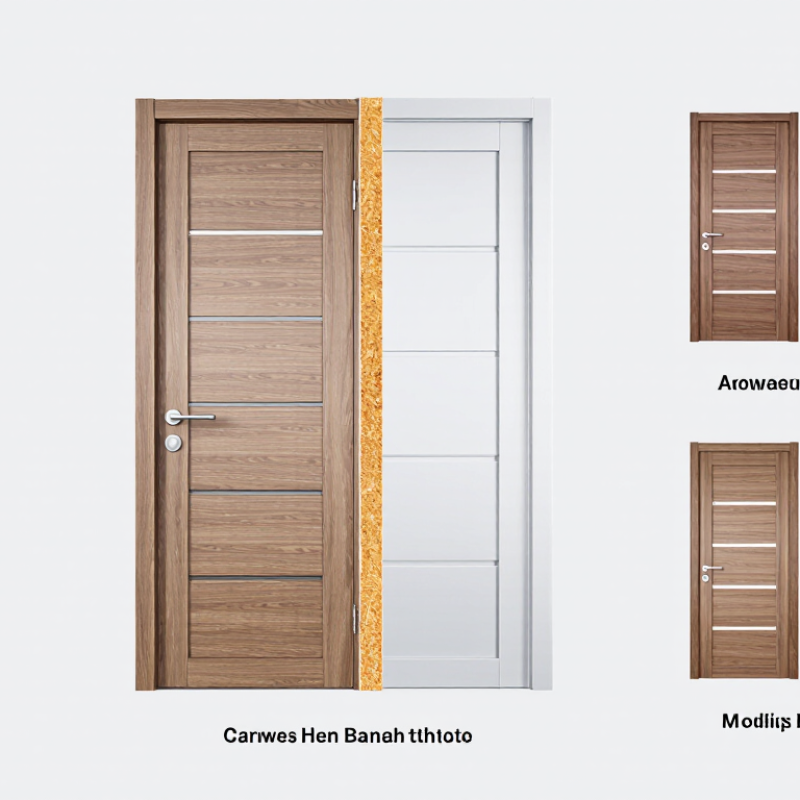
A flush wood door has smooth, uninterrupted faces without raised panels or decorative mouldings. Its basic structure usually includes two thin wood veneers, a core, adhesive layers, and concealed edge components. The face may use natural veneer, engineered veneer, or a paint-grade fibre panel. The result looks simple, but the internal build determines weight, stability, sound control, and impact resistance.

The core is often hollow honeycomb, particleboard, or solid composite material. Hollow cores reduce weight and cost. Solid cores feel denser when the door closes and generally provide better acoustic performance. Stiles reinforce the vertical edges, while rails support the top and bottom. A lock block strengthens the area around the handle and latch. Field experience shows this detail matters; weak reinforcement can cause loose hardware after repeated use.

The 2021 USDA Forest Products Laboratory Wood Handbook reports that indoor wood products commonly equilibrate near 6–12% moisture content, depending on conditions. That range explains why installation and climate control affect door movement. WDMA I.S. 1A performance standards also distinguish doors by duty level, dimensional stability, and construction requirements. A smooth surface can look flawless. It can still hide a weak core or poorly bonded veneer. Inspectors should check edge sealing, veneer alignment, hardware blocking, and moisture exposure. One overlooked detail remains the bottom edge. It often receives the least attention, yet it can absorb water first.
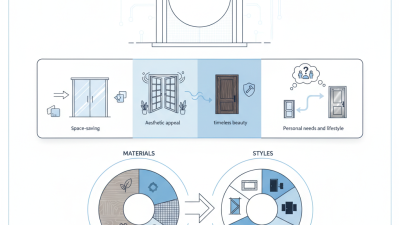
Materials and Layers Used in Flush Door Construction

What Is a Flush Wood Door?

A flush wood door has smooth, flat faces without raised panels or decorative grooves. Its clean appearance comes from layered construction rather than a single piece of timber. The visible surface may use natural wood veneer, reconstituted veneer, or a painted hardboard skin. Beneath it, a crossband layer helps reduce warping and limits movement across the grain.

The core provides most of the door’s weight, strength, and performance. Common cores include particleboard, laminated timber, and honeycomb structures. A solid core feels denser and usually offers better sound control. A hollow or cellular core feels lighter, but it may resist impact less effectively. Edge lippings, often made from solid wood or engineered timber, protect the vulnerable sides around hinges and the lock.

Manufacturers bond these layers with adhesive and press them under controlled heat and pressure. Poor bonding can create bubbles, open joints, or face separation. I have found that edge sealing deserves equal attention, especially in humid rooms. Even a well-built door can absorb moisture through an unfinished edge. Sanding, primer, and topcoat then protect the faces and create the final appearance. A small surface flaw may reveal careless preparation, but it does not always indicate a weak core. For acoustic, fire, or moisture-resistant applications, the complete door assembly must meet the relevant tested requirements, not just the panel itself.

How Flush Wood Doors Are Manufactured

A flush wood door is built with smooth, uninterrupted faces rather than raised panels. Its appearance looks simple, but its construction demands careful control. Manufacturers usually combine a wood veneer, engineered core, stabilizing layers, and a balancing veneer. This structure improves flatness and reduces movement caused by humidity changes. The USDA Forest Products Laboratory’s Wood Handbook explains that wood changes dimension mainly across the grain as moisture levels shift.

Manufacturing starts with veneer selection and conditioning. Sheets are matched for grain direction, color, and thickness. The core is then assembled from composite wood, timber components, or a mineral-based material. Adhesive is applied evenly before the layers enter a hot press. Pressure and temperature must remain consistent. Otherwise, bubbles, weak bonds, or surface telegraphing may appear. The core matters. After pressing, the door is trimmed, sanded, and machined for hinges and locks. Edges receive matching lippings or protective treatments.

Quality teams inspect flatness, bond strength, surface defects, and moisture balance. WDMA I.S. 1A-21 establishes construction and performance requirements for architectural wood flush doors. Formaldehyde control also matters. EPA TSCA Title VI limits emissions to 0.05 ppm for hardwood plywood, 0.09 ppm for particleboard, and 0.11 ppm for medium-density fiberboard. A factory may meet every specification and still find slight color variation. That is not always a failure, but it deserves review. Small errors show.

What Is a Flush Wood Door? - How Flush Wood Doors Are Manufactured

Category Typical Information Manufacturing or Performance Detail Practical Significance
Definition A flush wood door has smooth, flat faces without raised panels, applied mouldings, or recessed decorative panels. The visible faces are usually formed from wood veneer, hardwood veneer, or a wood-based panel applied over a structural core. Its simple surface provides a clean appearance and a relatively uniform base for paint, stain, or laminate finishes.
Main Door Components Face skins, core, perimeter frame, edge bands, adhesive, and finish coating. The skins provide the finished appearance, while the core and frame provide stiffness, screw-holding capacity, and dimensional stability. Each component affects weight, sound control, fire performance, moisture resistance, and service life.
Common Core Types Hollow-core, honeycomb-core, particleboard-core, stave-core, and solid-lumber-core constructions. Lightweight cores reduce weight and cost; engineered or solid cores generally provide greater mass, stiffness, and sound-reduction potential. The intended location and performance requirements determine which core is appropriate.
Typical Thickness Approximately 35 mm to 45 mm for many interior applications; thicker constructions are also available. Final thickness depends on the core, face material, edge construction, hardware requirements, and applicable building specifications. The door thickness must match the frame, hinges, locks, and any required performance rating.
Face Materials Natural wood veneer, reconstituted veneer, plywood, hardboard, or medium-density fiberboard overlays. Face sheets are selected for grain appearance, surface quality, paintability, stability, and compatibility with the selected adhesive. The face material largely determines the door’s visual character and finishing method.
1. Material Preparation Wood components and panel materials are inspected, cut, and conditioned before assembly. Materials are checked for defects, moisture variation, correct dimensions, and compatibility with the planned construction. Proper preparation helps reduce warping, open joints, surface defects, and bonding problems.
2. Core and Frame Assembly Rails, stiles, lock blocks, and the selected core are arranged to form the door blank. Additional solid blocking is commonly placed where hinges, locks, closers, or other hardware will be installed. Accurate blocking and framing improve hardware attachment and help maintain the door’s geometry.
3. Adhesive Application Adhesive is applied between the core, frame, and face skins. Application rate, open time, temperature, and surface cleanliness are controlled to produce a continuous bond. Uniform adhesive coverage helps prevent delamination, bubbling, and loose face materials.
4. Pressing The assembled door is placed in a flat press or hot press. Controlled pressure, temperature, and pressing time consolidate the layers and allow the adhesive to cure. Pressing creates a flat, stable panel and improves contact between the face skins and the core.
5. Trimming and Machining Edges are trimmed and the slab is sized; hinge, lock, and other hardware preparations may be machined. Computer-controlled or dedicated woodworking equipment can produce consistent dimensions and hardware locations. Accurate machining supports smooth installation and correct alignment with the door frame.
6. Edge Treatment Exposed edges may receive matching veneer, solid-wood lippings, or another protective edge material. Edge treatment protects the core, improves appearance, and provides a durable surface for finishing and hardware installation. Sealed edges are especially important in areas exposed to frequent handling or moderate humidity changes.
7. Sanding and Surface Preparation The faces and edges are sanded to remove irregularities and prepare the surface for coating. Sanding is performed progressively to achieve a consistent surface without damaging veneer or exposing the substrate. A properly prepared surface improves coating adhesion and produces a more uniform appearance.
8. Finishing Typical finishes include paint, clear coating, stain, or decorative laminate. Coatings are applied according to the substrate and required appearance, then allowed to dry or cure under controlled conditions. Finishing protects the surface from normal wear and can improve resistance to moisture and staining.
Quality Inspection Inspection commonly covers size, squareness, flatness, surface appearance, edge quality, and hardware preparation. Doors may also be checked against project-specific requirements for moisture exposure, acoustics, fire resistance, or accessibility. Inspection helps confirm that the finished slab is suitable for its intended opening and service conditions.
Typical Advantages Clean modern appearance, efficient production, flexible finishing options, and compatibility with many interior designs. The flat construction can be produced with different cores, face materials, edge details, and hardware preparations. Flush doors are often selected when a simple appearance and predictable manufacturing process are desired.
Important Limitations Performance varies considerably with the core, face material, edge construction, and finish. A standard interior flush door should not automatically be assumed to be fire-rated, exterior-rated, or suitable for wet locations. Project specifications and applicable building standards should be reviewed before selecting a door construction.

Common Types and Core Designs

What Is a Flush Wood Door?

Common Types and Core Designs

A flush wood door has a smooth, flat face without raised panels or decorative molding. Its simple surface suits modern, commercial, and practical interiors. The door may use natural wood veneer, engineered wood, or a durable laminate finish. Veneer offers visible grain, while laminate provides more consistent color and easier cleaning.

The core design affects weight, sound control, strength, and price. Hollow-core doors feel light and work well for bedrooms or low-traffic areas. They usually provide limited privacy. Solid-core doors contain dense wood fiber or composite material. They feel heavier and reduce sound more effectively. Some doors use a mineral or fire-rated core for specific building requirements, but performance must be verified through certified documentation. A wooden edge can still reveal poor construction. Check it carefully.

Tips: Lift the door slightly before installation. A heavy panel may need stronger hinges. Tap the surface and compare its sound across several areas. A hollow response can suggest a lighter core, though this test is not conclusive. For humid rooms, inspect the finish and edge sealing. Even a well-made flush door can swell when moisture reaches exposed edges. I have found that buyers often focus on appearance first. That is understandable, but the core usually determines daily comfort.

Typical Uses and Key Performance Features

What Is a Flush Wood Door?

Typical Uses and Key Performance Features

A flush wood door has a smooth, flat face without raised panels or decorative mouldings. Its simple surface suits offices, apartments, schools, bedrooms, and service areas. I have seen these doors work especially well where clean lines and easy maintenance matter. They can be painted, stained, or covered with a durable surface layer.

Core construction affects performance more than appearance. Solid cores usually provide better sound control and a stronger feel. Hollow cores are lighter and often more economical, but they offer less privacy and impact resistance. In busy corridors, reinforced edges and suitable hinges help prevent sagging. Moisture-resistant construction is important near kitchens, washrooms, and changing areas. Still, “moisture-resistant” does not mean waterproof.

A well-installed flush wood door should close evenly, reduce unwanted drafts, and remain stable through normal seasonal changes. Accurate measuring matters. Small gaps can reduce acoustic and energy performance. Door closers, locks, and frames must also match the door’s weight and use frequency. Fire-rated versions require approved assemblies and correct installation, not just a compliant-looking leaf.

The design is practical, but never perfect. Poor ventilation, standing water, or repeated impacts can damage even a quality door. Regular checks should look for swollen edges, loose hardware, and rubbing against the frame. In some projects, I would choose a more specialized door instead. That decision depends on traffic, humidity, security needs, and the actual building conditions.

What Is a Flush Wood Door? Typical Uses and Key Performance Features

Flush wood doors have smooth, flat faces and are commonly used in offices, schools, hospitals, apartments, hotels, and residential interiors. Solid-core constructions generally provide better sound control and durability than hollow-core doors, while mineral-core assemblies can support higher fire-resistance ratings. Actual performance depends on the complete tested door, frame, hardware, glazing, and installation.