Why Is Panel Wood a Popular Choice for Buyers?
Panel wood is a popular choice for buyers who want practical, adaptable materials for furniture, cabinetry, and interior projects. Its appeal comes from more than appearance. Available in different finishes, thicknesses, and sheet sizes, it can suit a small shelving job or a larger renovation. A smooth, finished panel may also reduce preparation time, though the result depends on the product and the work involved.
Buyers often compare cost, durability, and ease of installation before choosing. Panel wood can offer consistent dimensions and broad availability, making it easier to plan cuts and match components. Some products are designed for painted surfaces; others show a wood-grain finish. Check the panel’s specifications, including its core material, surface coating, and recommended use. Moisture resistance varies. It is not automatic.
There are trade-offs worth considering. Lower-cost panels may have thinner finishes or less robust edges, and some can swell if exposed to moisture. Even a well-made sheet needs suitable support, careful storage, and appropriate fasteners. I would not treat every panel as interchangeable; that assumption can lead to disappointing results. The best choice depends on the room, expected wear, budget, and finish you want. Looking at these factors helps explain why panel wood remains appealing to many buyers, while keeping its limits in view.
What Panel Wood Is and How It Is Made
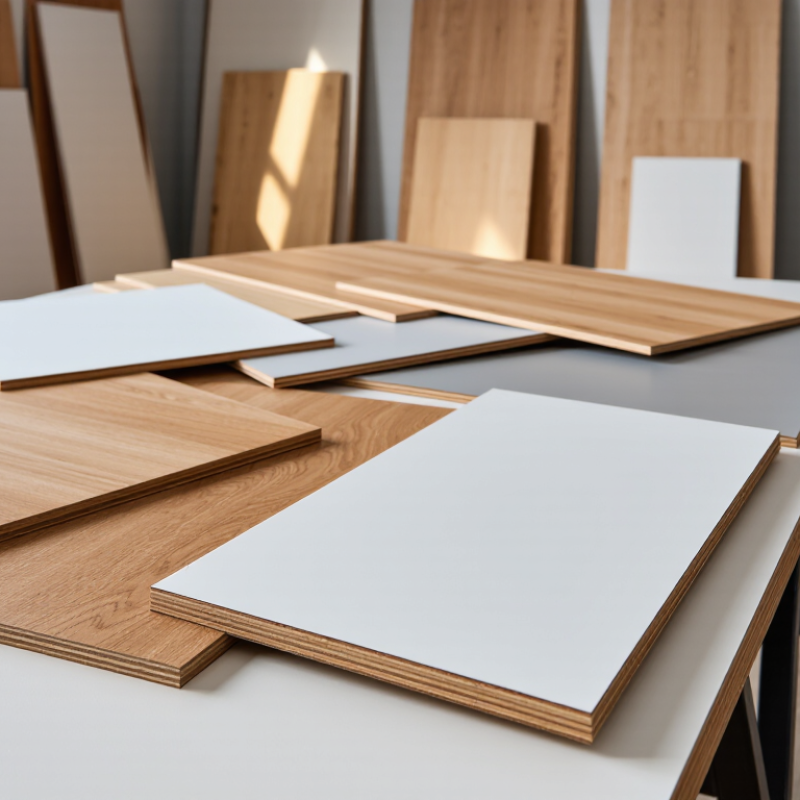
Panel wood is a broad term for sheet materials made from smaller wood pieces, rather than one solid plank.
Common types include plywood, particleboard, medium-density fiberboard, and oriented strand board. Each has a different structure and suits different jobs. The name can be confusing. A smooth panel may look similar to another, yet behave differently when cut or exposed to moisture.
Manufacturing begins with logs or wood by-products. For plywood, thin veneers are peeled from logs, layered with alternating grain directions, and bonded under heat and pressure. Particleboard uses wood chips or shavings mixed with resin and pressed into sheets. MDF uses finer wood fibers, creating a dense, even surface that takes paint well. OSB is formed from larger strands arranged in layers. The details matter.
Panels are trimmed, sanded, and checked for thickness and surface defects. Their performance depends on the wood, adhesive, pressing conditions, and intended grade. A carpenter can often spot differences at the edge: loose particles, layered veneers, or a fine, uniform core. Still, appearance alone is not enough. Some panels swell when wet, and cut edges may need sealing. The word “wood” can suggest a natural, simple material, but panel products are manufactured composites, so buyers should check the panel’s grade and use instructions before choosing.
Common Types of Panel Wood on the Market
Panel wood is popular because it offers predictable sizes, broad availability, and options for different budgets. The common types vary in structure and performance. Plywood is made from thin wood layers bonded together, which helps it resist splitting and stay stable. It suits cabinets, shelves, and many interior projects. However, exposed edges may need finishing.
Medium-density fibreboard, or MDF, has a smooth, even surface that takes paint well. It works nicely for cabinet doors and decorative trim, but it is heavy and can swell if water reaches unsealed edges. Particleboard is usually a lower-cost choice for furniture and interior panels. Its surface often has a laminate or veneer, though screws may hold less firmly near damaged edges. Solid wood panels show natural grain and can be repaired or refinished, but they may expand or contract as humidity changes. The names can be confusing, and product quality varies within each category.
Tips: Check the panel’s intended use, thickness, and moisture rating before buying. Look closely at the edges and surface. A smooth face alone does not tell the whole story. For shelves, consider the expected load and support spacing; even a sturdy panel can sag when spans are too wide.
Key Benefits That Attract Buyers
Panel wood appeals to buyers because it combines useful strength with manageable weight. Sheets are easy to carry, cut, and install, while factory-made dimensions help reduce uneven gaps in cabinets, shelves, and interior walls. The USDA Forest Products Laboratory’s Wood Handbook describes wood’s physical and mechanical properties, helping explain why wood-based panels suit many practical building tasks. Buyers also value the smooth, consistent faces available on many panels, which can take paint, laminate, or veneer with less preparation than rough solid lumber. A clean edge makes a difference.
Scale is another factor. FAO’s 2022 forest-products statistics report worldwide wood-based panel production at about 399 million cubic metres, reflecting broad use across construction and furniture markets. That figure does not mean every panel is interchangeable. Plywood, particleboard, and fibreboard differ in strength, weight, and response to moisture. Check the panel grade and intended use before choosing; a low-cost sheet may disappoint when exposed to damp conditions or repeated loading. Moisture still matters. Sealed edges, suitable fixings, and proper support can improve performance, but they cannot compensate for the wrong panel in the wrong setting. Some buyers may also prefer solid wood’s visible grain and repairability, so panel wood is a practical option, not an automatic upgrade.
Where Panel Wood Is Commonly Used
Where Panel Wood Is Commonly Used
Panel wood is common in kitchens, bedrooms, offices, and retail interiors. In kitchens, it forms cabinet sides, doors, drawer fronts, and sturdy shelf dividers. A smooth panel can also create a clean backing for open shelving. In bedrooms, it is often used for wardrobes, headboards, and storage units. Desks and bookcases benefit from its broad, flat surfaces. The right panel depends on the job; not every type handles weight or moisture equally well.
Wall panels can add texture to hallways, living rooms, and workspaces. Some are installed as decorative features, while others cover uneven surfaces. Panel products also appear in door cores and as stable bases beneath certain finishes. Bathrooms and utility rooms need extra care. Damp air can affect unsealed edges, even when the visible face looks sound. That detail is easy to overlook. There is no universal panel for every room, and appearance alone can be a poor guide.
Tips: Check the panel’s intended use, thickness, and moisture rating before buying. For shelves, consider the span and expected load; a thin sheet may sag. Seal exposed edges where appropriate, and follow the manufacturer’s installation guidance. When unsure, compare a sample in the room’s actual light.
Why Buyers Choose Panel Wood: Common Uses and Typical Thicknesses
Panel wood is popular because large, uniform sheets are versatile and efficient to install. It is commonly used for cabinetry, furniture, wall and roof sheathing, and subfloors.
Thicknesses are representative examples in millimetres, not fixed requirements; available sizes vary by product, application, and market.
Factors Buyers Consider When Choosing Panel Wood
Buyers compare panel wood by price, thickness, flatness, surface quality, and intended use.
A cabinet door needs a smooth face; shelving needs stiffness and reliable screw-holding. FAO’s Global Forest Products Facts and Figures 2022 reports worldwide wood-based panel production of
about 391 million cubic metres
that year. The scale is impressive. But production volume alone says little about a panel’s suitability for a damp kitchen or a heavily loaded shelf.
Material composition matters.
Plywood, particleboard, and medium-density fibreboard differ in weight, edge strength, machining, and response to moisture. Ask for the panel grade, thickness tolerance, and test documentation—not just a product description. For U.S. projects, EPA TSCA Title VI limits formaldehyde emissions to
0.05 ppm for hardwood plywood,
0.09 ppm for particleboard, and
0.11 ppm for MDF. Small details matter. A buyer should check that documentation matches the actual panel type.
Handling and finishing can change the outcome.
Inspect a cut edge for loose particles, and check that sheets lie flat before installation.
Moisture-resistant does not mean waterproof.
An unsealed edge can still swell. It is easy to overvalue a low price per sheet; waste, hardware failures, or extra finishing can erase the saving. I would also question a specification that says “strong” without naming the load, span, or test method.